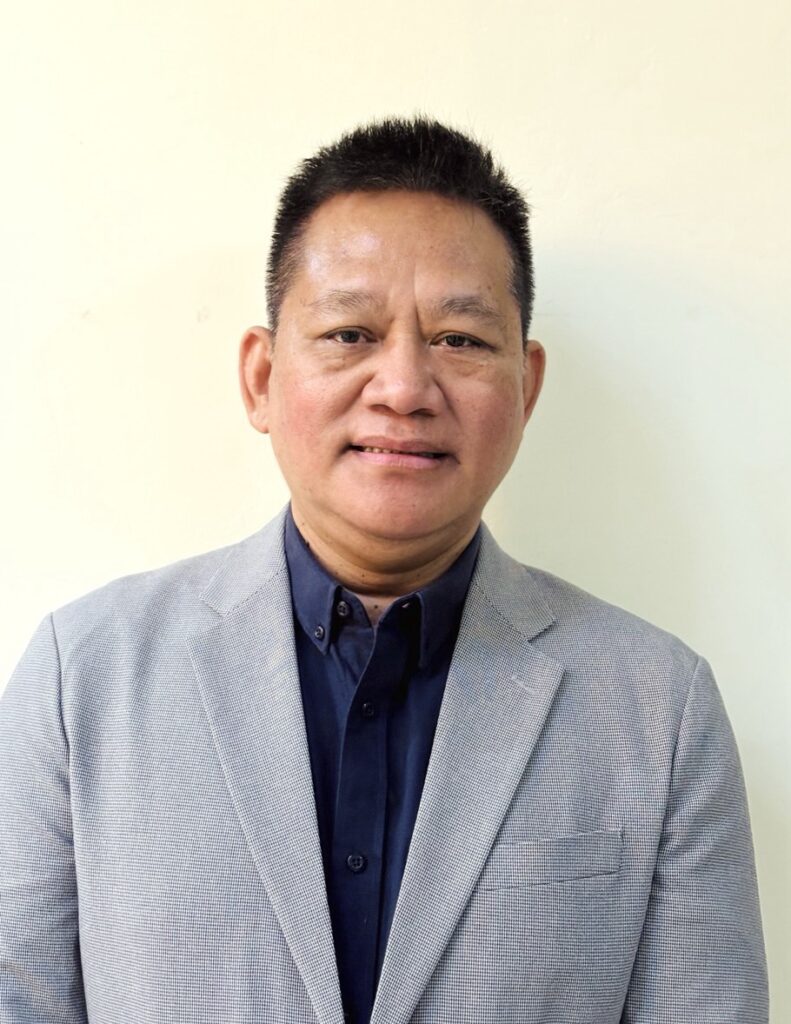
Haris Muhtadi
Deputy Commercial Director – Shrimp Business
De Heus
Indonesia
Haris is Deputy Commercial Director – Shrimp Business at De Heus, Indonesia. A graduate in fisheries from Diponegoro University, Indonesia, he started his career in aquaculture as a farm technician at a CP Prima farm in Medan, Sumatra where he was responsible for shrimp grow-out farm management and demonstrations to farmers. He previously worked as Sales Manager for shrimp feeds with PT Suri Tani Pemuka, Technical Sales Manager at Alltech Biotechnology, and Associate Director at PT CJ Feed and Livestock Indonesia.
Collectively, he has over 30 years of extensive experience in the shrimp feed industry. With a proven track record of progressing from sales and area management to high-level directorial leadership, he is an expert in driving sales strategies, market expansion, and cross-functional team leadership. Haris is deeply committed to the industry through active participation in key professional organizations, including the Indonesia Aquaculture Society, Shrimp Club Indonesia, and Indonesian Feedmill Association, contributing significantly to the advancement of Indonesia’s aquaculture sector.
State of Industry: Feed Commodities & Aquafeed
Abstract
Indonesia's aquafeed industry sits at an inflection point. Aggregate feedmill capacity has expanded well ahead of actual demand; shrimp farming is split between a large, low-productivity traditional base and a small but growing intensive segment, while freshwater fish farming (tilapia, catfish, carp) now anchor volume growth more reliably than the higher-margin marine fish segment, which has effectively stalled.
Before 2019, it was the era of Indonesia’s shrimp feed industry to thrive, with a high volume of sales of high crude protein (38-42%CP) commodity diets sold mainly to feed shrimp in large rectangular ponds (2,500–5,000m²).Competition was mainly on price and brand trust. However, in 2019, driven by fishmeal prices, most companies underwent a reformulation era. They started to cut nominal %CP towards the low-30s, replacing bulk fishmeal/soybean meal with amino-acids-balanced formulations.
Throughout the years, Indonesia has gone through significant changes to increase production yield - from feed formulations to diversifications in pond formats. Yet, diseases and the global market situation have dictated the pathway. GPMT-affiliated feedmills alone have installed capacity exceeding 31 million tonnes/year across all feed types (livestock and aquafeed) — far above actual aquafeed offtake of roughly 7–8 million tonnes. It is signalling under-utilization in parts of the system. It was built against repeatedly missed government targets. This situation had compressed margins of feed millers via price and credit competition. In addition, more than 80% of Indonesia’s shrimp ponds remain traditional. This is the single biggest structural constraint limiting growth in feed demand in shrimp aquaculture.
In 2022-2024, volume declined over the years despite a 250% growth target. Indonesia ranked 4th among vannamei shrimp exporters. In 2025, the sector rebounded as the U.S. market recovered sharply from the Caesium-137 radiation scare earlier that year, and by October Indonesia had become the first FDA-authorized self-certifier of Cs-137-free shrimp.