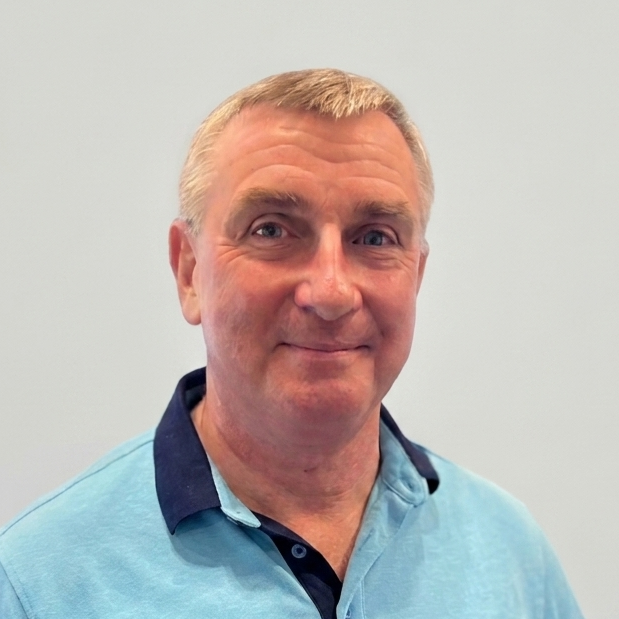
Dan Fegan
Technical Consultant
I&V Bio
Thailand
Since late 2025, Dan has been working with I&V Bio as a technical consultant to support the development of I&V Bio products and provide technical assistance to I&V Bio sales teams and customers across the globe.
Dan has been involved in shrimp aquaculture for over 40 years and has worked in many aspects of commercial shrimp culture, including hatchery, farm, and nursery production; health management; nutrition; genetics; and technical support for shrimp producers. He was a director of the World Aquaculture Society and President of both WAS and WAS-APC (Asian Pacific Chapter). He served on many scientific and technical committees for international organisations.
Dan started his career as part of the team developing the earliest shrimp larval feeds, resulting in the establishment of Frippak Feeds. Following this, he worked with Aquastar, one of the first contract shrimp farming operations established in Thailand in the late 1980’s. During this period, he worked in hatchery, nursery and farm production, farmer training and technical support for six farm sites incorporating around 1,000 farmer ponds.
After a short spell in Malaysia, Dan returned to Thailand, where he helped set up the Shrimp Biotechnology Business Unit of the National Centre for Genetic Engineering and Biotechnology (BIOTEC). Among its activities was the development and marketing of some of the earliest commercial PCR test kits for shrimp diseases, technical training, consulting and contract research, and setting up a consortium for the domestication of Penaeus monodon.
After leaving BIOTEC, Dan worked to establish Alltech Aqua, a division of Alltech, which pioneered the use of many yeast products and organic minerals in aquaculture. He then joined Cargill as a Technical Manager, developing feed formulations for shrimp, tilapia and catfish, and providing technical support to Cargill customers.
In 2016, he joined SyAqua, a shrimp genetics company with which he spent 8 years. During that time, SyAqua developed from a relatively minor player to one of the world’s leading shrimp genetics brands.
Smart Feeding & Management
Abstract
Artemia is well known as a major source of nutrition for shrimp and fish larvae due to its availability, ease of production, digestibility and nutritional profile. Hatcheries typically buy unhatched cysts and hatch them on-site before use. Care must be taken when hatching Artemia to ensure good hatching efficiency, and to avoid biosecurity issues due to bacterial contamination, taking place during the hatching process.
Despite the benefits of Artemia, shrimp post larvae producers often try to cut back on the use of Artemia as a way of cutting costs. However, this can have the unintended consequence of lowering post larvae development and quality. Variations in cyst quality and hatching rate depend on source, quality and hatching conditions and can provide inconsistent results, especially when hatching rates or nauplius counts are assumed rather than calculated.
Enriching Artemia Instar 2 with fatty acids such as EPA and DHA increases the nutritional profile of Artemia making it a more complete feed for developing post larvae. However, the enrichment process is messy and labour-intensive and as a result, it never caught on in shrimp culture, as opposed to marine fish culture.
The development of cost-effective, ready to use live enriched Artemia allows producers to gain the benefits of enrichment without the additional work required to enrich on-site. This not only makes it easier to use enriched Artemia in the hatchery but opens the possibility of using it in nursery and immediate post-stocking applications.
This presentation offers a new look at the use of enriched Artemia to produce high quality post larvae and how it can be used as a functional food for nursery and post-stocking applications on the farm.