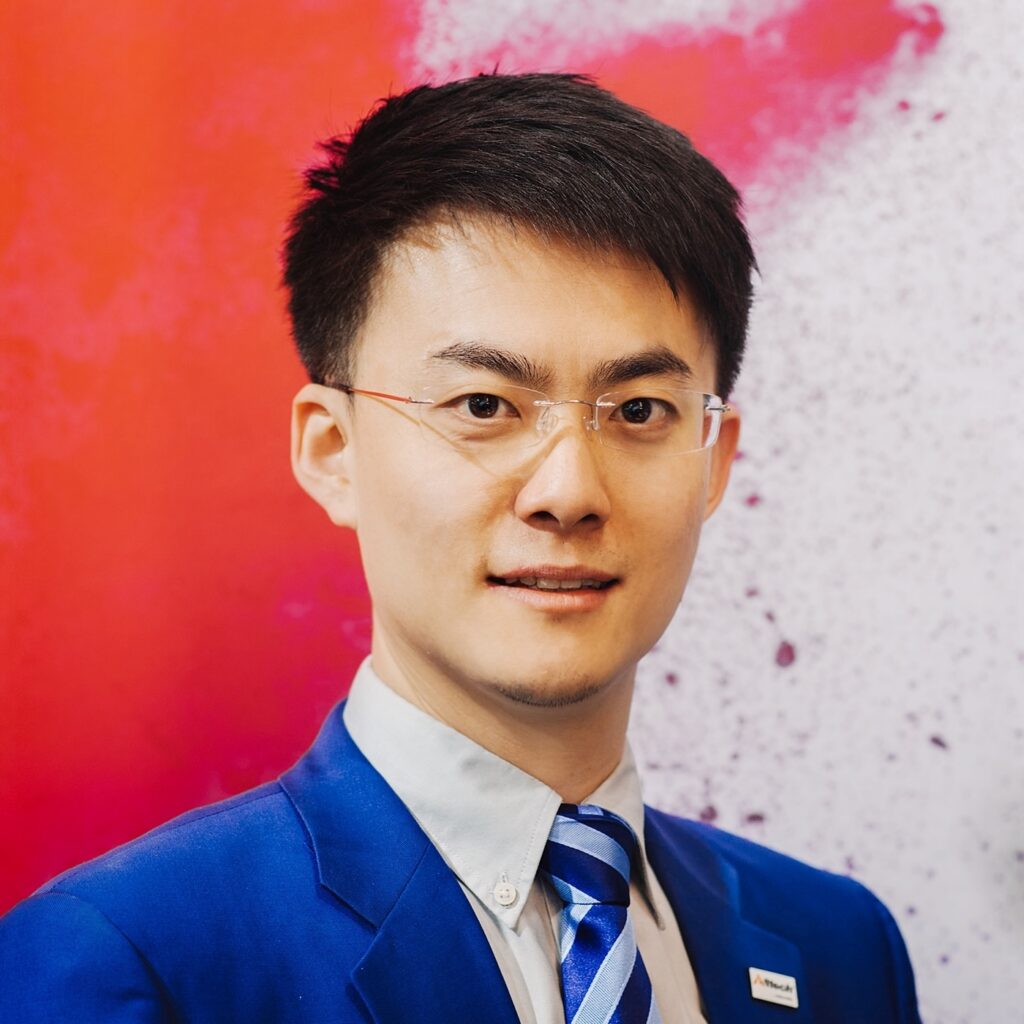
Will Gang Lin
Research & Technical Director, Greater China
Alltech
China
Will is an accomplished monogastric nutritionist with extensive expertise in leading product development and providing strategic sales support across the feed and animal production industries. With a strong background in commercial feed mill operations, livestock and aquaculture production, as well as research and industry training, He leverages his deep scientific knowledge and practical experience to drive business growth and technological innovation.
In addition to his role as Research & Technical Director, Greater China, Will serves as a consultant for mid-sized feed manufacturers and integrators and holds adjunct professor and co-principal investigator positions at several universities. He has played a pivotal role in establishing the 'Alltech Research Alliances', fostering collaborations between academic institutions, research centers, and major enterprises.
Having worked closely with nearly all of the top 20 feed companies and animal producers in China, he offers tailored solutions through technical support, collaborative research, and professional workshops. He excels at translating research insights into commercially viable technologies, delivering customized strategies that address specific customer needs and enhance market competitiveness.
Will holds a PhD from China Agricultural University (CAU) and Texas A&M University (TAMU), complemented by postdoctoral training at CAAS. As an active peer reviewer for leading scientific publications and a council member of the China High-Tech Industrialization Association (Feed Branch), He remains at the forefront of industry advancements.
Risk Management, Health & Functional Feeds
Abstract
White spot disease caused by Ichthyophthirius multifiliis (Ich) poses a major threat to freshwater aquaculture worldwide. Chemical treatments face challenges of environmental pollution, drug residues, and resistance development. This study series systematically demonstrates that concentrated mannan rich fraction (MRF) serves as an effective and eco-friendly alternative for Ich prevention.
Evidence: Initial studies in goldfish showed that feeding 4‰ MRF for 60 days significantly enhanced mucosal immunity in skin and gills, characterized by increased mucus cell numbers, thicker epidermal layers, and upregulated Muc-2 expression. Challenge experiments revealed dramatically reduced mortality (10% vs 43%), fewer trophonts, and less tissue damage in MRF-fed fish.
Mechanism: Transcriptomic and immunological analyses revealed that MRF activates macrophage phagocytosis via the mannose receptor (MR) pathway. It enhances innate immunity by upregulating phagocytosis-related genes and modulating inflammatory responses—boosting defense while preventing excessive inflammation.
Application: The strategy was successfully extended to grass carp, an economically important species. Optimal protocols were established: 4‰ MRF for 3 weeks or 2‰ MRF for 4 weeks significantly improved resistance to Ich, promoted mucus cell and T/NK-like lymphocyte proliferation, and regulated key immune genes (IL-1β, IL-10, Muc-2, TCR). Additionally, MRF improved growth performance without adverse effects.
In conclusion, MRF represents a safe, effective, and sustainable solution for Ich prevention in aquaculture, offering a green alternative to chemical treatments and supporting the industry's transition toward environmentally responsible practices.
*Co-authors: Senyue Liu, Fulong Li, Henry Wong, and Xiaoli Huang